
The sudden groan of a garage door spring, the frustrating scrape of a front door that won’t close, or the unnerving draft from a lock that no longer aligns—these are more than just household annoyances. They are urgent security risks and disruptions to your daily life that demand immediate attention. When you’re facing a critical door repair issue, you need clear answers and a reliable solution, not more questions and uncertainty.
That’s why we created this complete guide. We’re here to help you quickly diagnose the most common problems with every door in your Canadian home, from interior doors and entryways to the complex mechanisms of your garage door. You’ll learn to identify which issues are safe for a quick DIY fix and, more importantly, recognize the signs that mean it’s time to call a certified professional. We’ll cut through the confusion so you can find a fast, effective solution and restore your home’s security and your peace of mind.
Diagnosing Your Door Problem: A Quick Homeowner’s Triage
When a door in your home stops working correctly, it’s more than a minor annoyance—it can disrupt your daily routine, compromise your security, and affect your energy bills. Before you can find a solution, you need to identify the root cause. Most issues fall into three categories: alignment, hardware failure, or physical damage. This quick triage will help you assess the severity of the problem and determine whether you need professional door repair services or if a simple DIY fix is within reach.
Knowing exactly what’s wrong is the first step toward a fast, effective solution. It ensures you can describe the problem accurately, whether you’re buying parts at a Canadian hardware store or calling a certified technician for help.
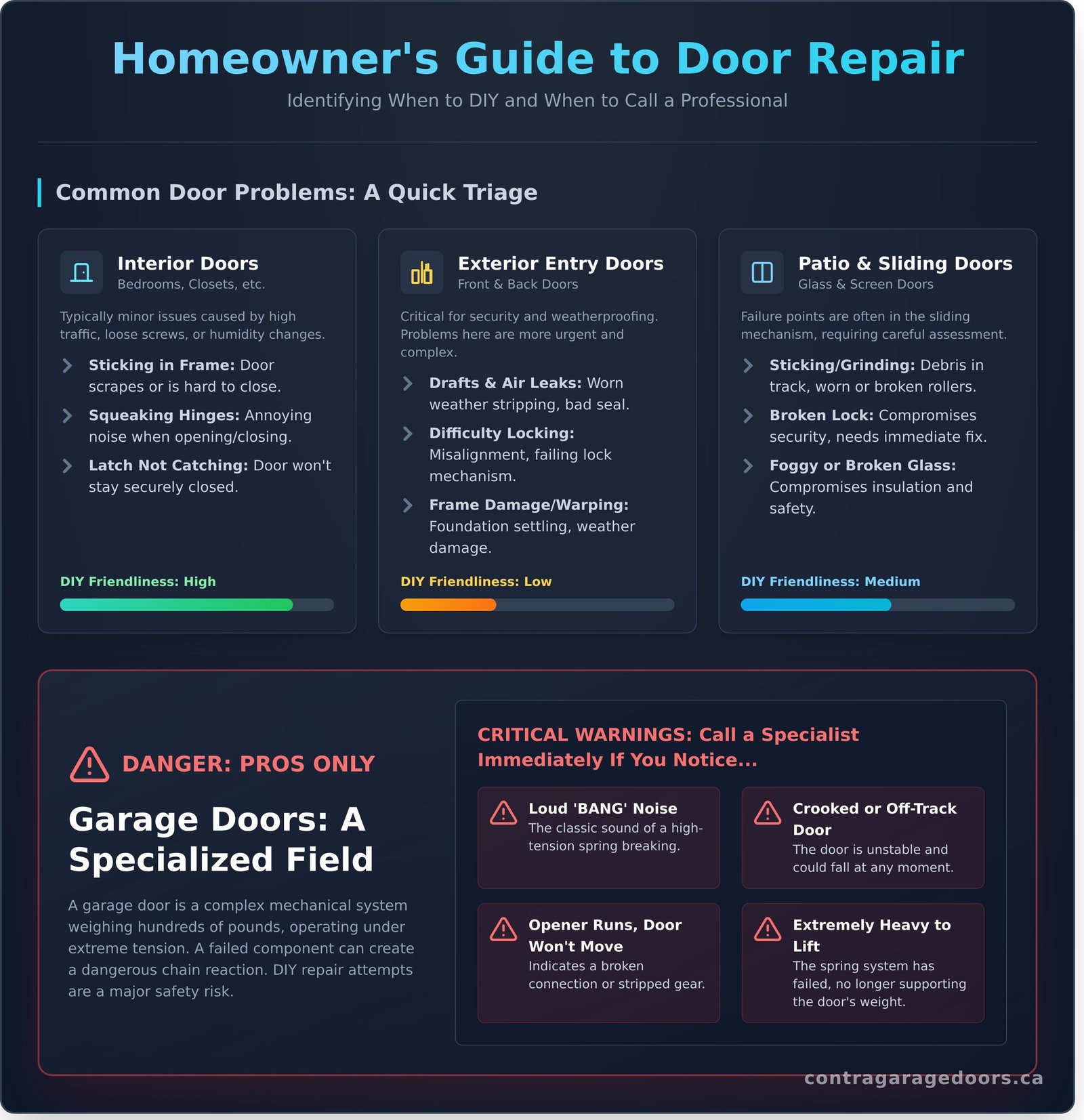
Interior Doors (Bedrooms, Closets)
These doors handle high traffic but rarely face harsh elements. Common problems like sticking in the frame, squeaking hinges, or a latch that won’t catch are typically minor. More often than not, these are simple alignment or lubrication issues caused by loose hinge screws or humidity changes. For a handy homeowner, these are often manageable weekend fixes that restore peace and quiet to your home.
Exterior Entry Doors (Front & Back Doors)
Your front and back doors are critical for security and weatherproofing. Issues here demand more urgent attention. If you feel a draft, have difficulty turning the key, or see visible damage to the frame, the problem is more serious. These symptoms often point to worn weather stripping, foundation settling that has warped the frame, or failing lock mechanisms. A basic understanding door components can help, but due to the security implications, professional assessment is highly recommended.
If the problem is a failing lock mechanism, this is an excellent opportunity to upgrade your home security. Modern digital locks offer enhanced protection, and seeing what’s available from international specialists can provide great ideas. For instance, the product range at andigitallock.com showcases many of the latest advancements in digital lock technology.
Patio and Sliding Doors
The convenience of a sliding door can quickly turn into a frustrating struggle when it sticks, grinds, or refuses to lock. The sliding mechanism—specifically the rollers and track—is the most frequent point of failure. A buildup of dirt and debris in the track is a common culprit, but worn-out or broken rollers are also a primary cause. Other issues include broken locks and foggy or broken glass panes, which can compromise both security and insulation.
Why Garage Door Repair is a Specialized Field
A malfunctioning garage door is more than an inconvenience; it’s a breakdown of a complex, heavy-duty mechanical system. Unlike a simple interior door, your garage door can weigh hundreds of pounds and operates with multiple interconnected parts under extreme tension. This isn’t a task for a general handyman. Attempting a fix without specialized knowledge and tools can lead to further damage, costly mistakes, or severe personal injury. Trusting a certified professional is the only safe and reliable solution.
Understanding the Core Components
To appreciate why professional service is critical, you must understand the main players working together to lift and lower that heavy door. One failure in this system can cause a dangerous chain reaction. The core components include:
- Springs: These are the powerhouse of the system, doing the actual heavy lifting. Whether you have torsion springs (mounted above the door) or extension springs (along the sides), they are wound under immense tension to counterbalance the door’s weight.
- Cables: High-tension steel cables work in tandem with the springs to lift the door evenly and safely. If one snaps, the door can fall.
- Opener: This is the motorized unit that automates the system. It doesn’t do the lifting but initiates the movement, and it must adhere to strict garage door safety standards to prevent accidents.
- Tracks & Rollers: These components act as the guide, ensuring the door moves smoothly up and down its path without binding or falling out of alignment.
The Dangers of DIY: High-Tension Springs and Cables
Attempting a DIY garage door repair, especially on springs or cables, is a risk you should never take. Torsion springs are wound under extreme pressure, storing a massive amount of mechanical energy. An improper adjustment or an uncontrolled release can cause the spring or winding tools to fly off with deadly force. Similarly, a frayed or damaged cable can snap without warning, causing the full weight of the door to crash down, posing a significant threat to anyone or anything in its path.
Signs You Need an Immediate Garage Door Specialist
If you notice any of the following red flags, your next step is clear: stop using the door and call a certified technician immediately. These are not minor issues; they are warnings of critical system failure that require professional door repair.
- A loud ‘bang’ from the garage: This is the classic sound of a torsion spring breaking.
- The door is crooked or off its tracks: The door is unstable and could fall.
- The opener motor runs, but the door doesn’t move: This often indicates a stripped gear in the opener or a broken connection to the door.
- The door feels extremely heavy to lift manually: This means the spring system has failed and is no longer counterbalancing the door’s weight.
The Top 4 Most Common Garage Door Failures (And How We Fix Them)
When your garage door fails, it’s more than an inconvenience—it’s a security risk. At Contra Garage Doors, we’ve found that over 90% of our service calls in Canada stem from just four common issues. Recognizing the symptoms is the first step, but a professional diagnosis is crucial to ensure a safe and lasting fix. Acting quickly on your garage door repair needs prevents minor issues from causing major damage to the entire system.
Problem #1: Broken Garage Door Springs
Symptom: A sudden, loud bang from the garage, like a firecracker, followed by the door refusing to open. The opener motor may run, but the door won’t lift.
Cause: Standard torsion springs are rated for 10,000 to 15,000 cycles. After years of lifting a heavy door, metal fatigue causes them to snap.
Our Solution: This is not a DIY job due to extreme tension. Our certified technicians will safely replace the spring (or both for balanced performance) with high-quality parts, ensuring proper tension for smooth, reliable operation.
Problem #2: Snapped or Frayed Cables
Symptom: The door hangs crookedly, gets stuck partway, or slams shut on one side. You may see a loose cable hanging near the door.
Cause: Over time, cables can fray, rust, and eventually snap from constant friction and tension. An issue with the spring or drum can also cause cable failure.
Our Solution: For your safety, we always replace both cables simultaneously. This ensures the door lifts evenly and prevents the older cable from failing shortly after, saving you a future service call.
Problem #3: Malfunctioning Opener
Symptom: The wall button or remote stops working, the door reverses unexpectedly after closing, or the motor makes grinding or humming noises without moving the door.
Cause: This can range from simple issues like misaligned safety sensors to complex internal problems like a stripped drive gear or a faulty circuit board.
Our Solution: Our experts quickly diagnose the root cause, performing precise opener adjustments or component replacements to restore function without the cost of a full opener replacement unless absolutely necessary.
Problem #4: Door Off-Track or Damaged Rollers
Symptom: The door operates with a jerky, loud, or grinding motion. You can see a visible gap between the rollers and the track, or the rollers have popped out completely.
Cause: This is often caused by an accidental impact, like a car bumping the door, but can also result from worn-out or broken rollers.
Our Solution: We carefully reset the door, realign the tracks, and replace any cracked or worn-out rollers to ensure smooth and quiet movement. This critical repair prevents permanent track damage.
If you’re facing any of these issues, don’t wait for the problem to get worse. A malfunctioning garage door is a risk to your family’s safety and your home’s security. For fast, professional service across Canada, visit contragaragedoors.ca or call us for our Same-Day Service Guarantee.
Choosing the Right Repair Service in Toronto: A Homeowner’s Checklist
When your garage door breaks, the clock starts ticking. But not all repair services are created equal, especially when you need an urgent fix. The company you choose directly impacts the safety of your family, the security of your home, and the quality of the work. A rushed decision can lead to repeat problems and higher costs down the road. Before you hire, use this checklist to vet any door repair service in the Toronto area and ensure you’re choosing a reliable professional, not just a quick fix.
Specialist vs. General Handyman
While a general handyman might seem like a cost-effective option, garage doors are complex systems with high-tension components that can be dangerous. A specialist arrives with the correct tools, high-quality parts, and a deep understanding of these risks. They can diagnose the root cause quickly and perform a repair that lasts, saving you from future breakdowns. A handyman may lack the specific expertise, leading to an unsafe or incomplete job.
Key Credentials: Insurance, Certification, and Reviews
Your peace of mind depends on the company’s professionalism. Before committing, verify these essential credentials:
- Liability Insurance: Always confirm the company has valid liability insurance. This protects your property from any accidental damage during the repair process.
- Verified Reviews: Look for recent, positive reviews on trusted Canadian platforms like Google and HomeStars. Consistent feedback is a strong indicator of reliable service.
- Trained Technicians: Ask if their technicians are certified or have completed professional training. A well-trained expert ensures the job is done right the first time, adhering to safety standards.
The Value of Same-Day Emergency Service
A broken or stuck garage door is more than an inconvenience—it’s a security risk that can trap your vehicle or leave your home vulnerable. A reputable company understands this urgency and prioritizes emergency calls. When a service offers a same-day guarantee, it shows they are equipped and committed to restoring your home’s safety without delay.
Need Help Now? Contra Offers Same-Day Service. No Excuses.
Your Trusted Partner for Door Repair in Toronto
Navigating home door issues, from a sticking front door to a malfunctioning garage system, starts with a clear diagnosis. As we’ve covered, while some fixes are simple, the complex and high-tension components of a garage door demand a professional’s touch for your safety. Choosing a certified, local expert isn’t just about convenience—it’s a critical investment in your home’s security and your family’s well-being.
When you’re facing a garage door emergency in Toronto and the GTA, you can’t afford to wait. That’s why Contra Garage Doors stands by our Same-Day Service Guarantee. Our team of certified and insured technicians is ready to provide the expert door repair you need, precisely when you need it. We don’t just fix the problem; we upgrade your peace of mind and get your day back on track.
Your Garage Door Stuck? Get a Fast, Reliable Repair Today.
Secure your home with confidence and don’t let a faulty door disrupt your life.
Frequently Asked Questions About Door Repair
How much does a typical garage door repair cost in the Toronto area?
In the Greater Toronto Area, the cost of a garage door repair can vary significantly based on the problem. A basic service call for minor adjustments or lubrication might start around C$120-C$150. More complex jobs, like replacing a broken torsion spring, typically range from C$350 to C$600+. The final price depends on the parts needed and the complexity of the labour. We always provide a clear, upfront quote before any work begins, ensuring no hidden costs.
Is it safe for me to try and repair my garage door spring myself?
Absolutely not. We strongly advise against attempting to repair or replace garage door springs yourself. These springs are under extreme tension and can cause severe injury or even death if they snap or are handled improperly. This is a job that requires specialized tools and professional training to be completed safely. For your own safety and peace of mind, please call a certified technician. Your well-being is not worth the risk.
Why is my garage door so noisy, and can it be fixed?
A noisy garage door is a common issue that can almost always be fixed. The noise usually comes from worn-out metal rollers, loose hardware, or a lack of lubrication on moving parts like hinges and springs. A professional tune-up is often the perfect solution. A technician can lubricate all necessary components, tighten bolts, and replace worn rollers with quieter nylon ones, restoring your door to smooth and quiet operation and preventing a future breakdown.
How long should a garage door spring last before it needs replacement?
Standard garage door springs are designed to last for about 10,000 cycles—one cycle is a full opening and closing of the door. For the average Canadian household, this translates to roughly 7 to 10 years of use. If you use your garage door more frequently, the lifespan will be shorter. We can also install high-cycle springs that are rated for 25,000 cycles or more, offering a longer-lasting solution for busy families.
Should I repair my old garage door or is it better to replace it?
This decision depends on the door’s condition and age. If the issue is mechanical (like a broken spring or cable) but the door panels are in good shape, a repair is usually the most cost-effective option. However, if your door has multiple damaged panels, significant rust, or is over 15-20 years old, a replacement is often a better long-term investment. A new door can improve your home’s security, energy efficiency, and curb appeal.
What regular maintenance can I do to prevent future door repairs?
Proactive maintenance is key to avoiding emergency calls. Twice a year, you can lubricate all moving parts—hinges, rollers, and springs—with a silicone-based garage door lubricant. Also, take a moment to tighten any loose nuts and bolts you see. The most effective step, however, is scheduling an annual professional tune-up. A technician can spot and address minor issues before they become a major and expensive door repair problem, saving you time and money.
What is the difference between door repair and emergency lockout services?
Door repair services focus on fixing mechanical and structural problems like broken springs or misaligned frames. In contrast, an emergency lockout service specializes in helping you regain access when you are locked out, which requires a different skill set. For example, specialized services for deblocari usi brasov non stop are dedicated to providing immediate, non-destructive entry for homeowners, highlighting another type of urgent door-related issue.