
A grinding halt. That’s what a malfunctioning commercial overhead door brings to your business. Every minute your loading bay is inaccessible or your warehouse is left unsecure, you’re losing money and creating a serious safety risk for your team. The stress is real, and the operational downtime is expensive. You need a solution, and you need it now, but finding a fast, reliable service when you’re under pressure is a challenge-especially when you aren’t even sure how to describe the problem.
This guide is your immediate action plan. We cut through the confusion to give you the essential information you need as a business owner. Here, you will learn to identify the type of overhead door you have, confidently diagnose common issues, and understand the crucial maintenance that prevents future breakdowns from happening in the first place.
Our goal is to empower you with the knowledge to make smart, fast decisions, ensure the safety of your employees, and find a professional partner who can get your operations back on track without delay. Let’s get your business moving again.
What is a Commercial Overhead Door? Key Types for Your Business
When your business operations grind to a halt because of a faulty door, you need answers-fast. A commercial overhead door is far more than a simple entryway; it’s a critical piece of equipment engineered for high-frequency use, superior durability, and enhanced security. Unlike a standard residential overhead garage door, a commercial model is built to withstand the demanding pace of daily operations, protecting your assets and maintaining workflow. Understanding your door type is the first step toward a quick and accurate repair, minimizing costly downtime. Every door consists of core components-panels, tracks, springs, and an opener-but their design varies significantly by type.
Sectional Steel Doors
Sectional steel doors are the workhorses of the commercial world, commonly found at loading docks, warehouses, and industrial facilities. Constructed from a series of hinged horizontal panels that ride on tracks, they are both robust and versatile. For businesses in Canada, insulated panels are a key feature, offering high R-values to improve climate control, reduce energy costs, and protect temperature-sensitive goods. Their reliable design makes them a top choice for most commercial applications.
Rolling Steel Doors (Coiling Doors)
When security and durability are non-negotiable, rolling steel doors are the solution. Ideal for storefronts, storage facilities, and high-security areas, these doors are made of interlocking steel slats that coil into a compact roll above the opening. This space-saving design is perfect for locations with limited ceiling height. Built from heavy-gauge steel, they provide formidable protection against break-ins and harsh weather, giving you peace of mind when you lock up for the night.
High-Speed Doors
In high-traffic environments where every second counts, high-speed doors are essential for maintaining productivity and environmental control. You’ll find them in parking garages, cold storage facilities, and manufacturing plants where rapid access is critical. Their primary benefit is speed-opening and closing in seconds to improve traffic flow and minimize energy loss. Often, they are installed as an interior door, working in tandem with a heavier, more secure exterior overhead door.
Top 5 Overhead Door Problems That Halt Business Operations
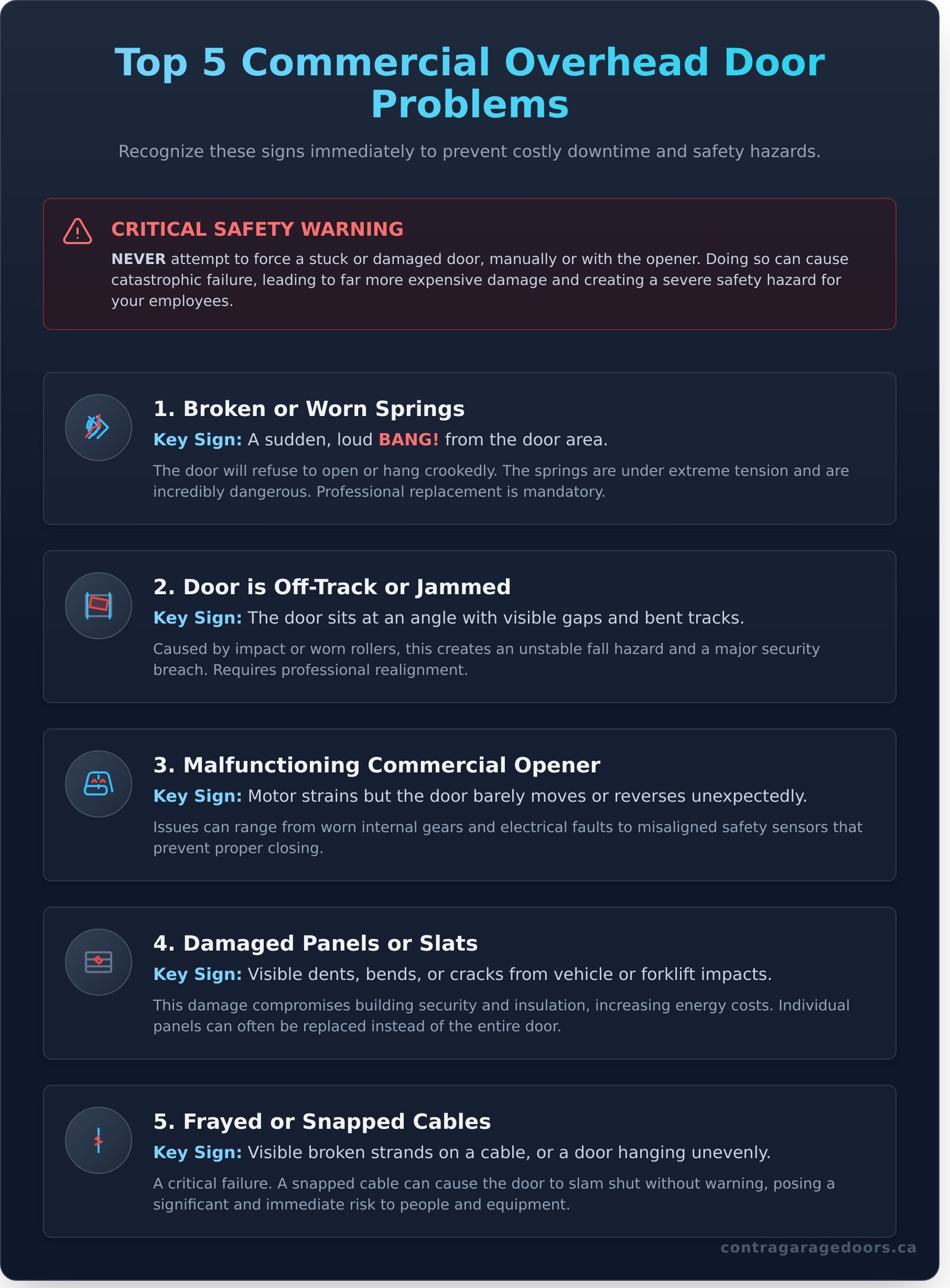
A non-functional overhead door isn’t just an inconvenience; it’s a direct hit to your bottom line. Every hour your bay door is stuck, you risk delayed shipments, lost productivity, and a serious breach in your facility’s security. It is critical to recognize these issues immediately and cease all operation.
Warning: Never attempt to force a stuck or damaged door, either manually or with the opener. Doing so can cause catastrophic failure, leading to far more expensive damage and creating a severe safety hazard for your employees.
1. Broken or Worn Springs
Did you hear a sudden, loud bang from your bay door area? That is the classic sign of a broken torsion spring. These high-tension springs do the actual heavy lifting, counterbalancing the door’s immense weight. If a spring fails, your door may refuse to open at all or hang crookedly. Because they are under extreme tension, broken springs are dangerous and should only be replaced by a certified professional.
2. Door is Off-Track or Jammed
A door that has come off its tracks is a major liability. Usually caused by an impact from a vehicle or worn-out rollers, the signs are obvious: the door sits at an angle, you can see visible gaps, and the tracks may be bent. This not only exposes your business to theft but creates an incredibly unstable situation where the entire overhead door could fall. A professional repair is essential to ensure the system is realigned and complies with workplace regulations, such as the OSHA safety standards for mechanically operated doors.
3. Malfunctioning Commercial Opener
If you press the button and hear the motor straining but the door barely moves or reverses unexpectedly, the issue likely lies with the opener. Unlike a spring problem where the door is dead weight, a faulty opener has power but can’t transfer it effectively. This can stem from worn internal gears, electrical faults, or misaligned photo-eye safety sensors that prevent the door from closing properly.
4. Damaged Panels or Slats
Accidents happen, and impacts from forklifts or delivery trucks are a common cause of dented, bent, or broken door panels. This damage is more than cosmetic-it compromises your building’s security and insulation, potentially driving up energy costs. The good news is that a full replacement is often unnecessary. Our technicians can typically source and install individual matching panels, providing a fast and cost-effective solution.
5. Frayed or Snapped Cables
The lift cables work in tandem with the springs to raise and lower the door safely. If you notice frayed strands or a snapped cable, stop using the door immediately. This is a critical failure. A broken cable will cause the door to hang unevenly and can result in the door slamming shut without warning, posing a significant risk to anyone or anything in its path.
Why Professional Overhead Door Repair is a Non-Negotiable
When your commercial overhead door malfunctions, the first instinct might be to task your in-house maintenance team with the fix. It seems faster and cheaper. But just as you wouldn’t ask a general handyman to rewire your building’s electrical panel, a specialized commercial door system demands a certified expert. Attempting an in-house repair often leads to greater risks, extended downtime, and higher long-term costs. A professional repair isn’t an expense-it’s a critical investment in your business’s safety, security, and operational uptime.
The Extreme Dangers of DIY Repair
A commercial door is a heavy, high-tension system where a small mistake can have catastrophic consequences. The most significant risks include:
- Torsion Springs: These springs are under immense tension to counterbalance the door’s weight. If they are handled improperly, they can release with explosive force, causing severe injury or death.
- Door Weight: Commercial doors can weigh hundreds of kilograms. A failed component or incorrect repair procedure can cause the door to fall suddenly, crushing anything in its path.
- Electrical Hazards: Commercial openers are powerful, high-voltage systems. Incorrect wiring or handling can result in electrocution or fire.
Access to the Right Tools and Commercial-Grade Parts
Your standard toolbox is no match for a commercial door. Our technicians arrive with specialized equipment, from torsion spring winding bars to tension gauges, ensuring the job is done correctly and safely. Furthermore, we use only high-cycle, commercial-grade parts. Using a residential-quality part in a high-traffic commercial environment is a recipe for premature failure, leading to another breakdown and more lost revenue.
Ensuring Compliance and Warranty Protection
A professional repair ensures your door system operates in compliance with local Canadian safety codes and regulations. Certified technicians are trained to adhere to strict industry safety and manufacturing standards, protecting you from liability. An improper repair by an uncertified person can instantly void your manufacturer’s warranty, leaving you responsible for the full cost of future failures. Protect your investment and your team. Don’t risk your safety or business. Schedule a professional repair.
How to Choose the Right Overhead Door Service in the GTA
When your commercial overhead door fails, it’s not an inconvenience-it’s a critical business disruption. It can halt shipments, compromise security, and cost you money every minute it’s down. Choosing the right repair partner isn’t just about finding a quick fix; it’s about securing your business’s continuity. A reliable service provider acts as an extension of your operations team, ready to respond instantly when you need them most.
Use this checklist to vet potential service providers and avoid costly mistakes. A few minutes of due diligence now can save you from days of downtime later.
Must-Have #1: 24/7 Emergency and Same-Day Service
Operational emergencies don’t stick to a 9-to-5 schedule, and neither should your repair service. A broken door at the start of a night shift or during a weekend delivery can bring your business to a standstill. Look for a company that guarantees 24/7 availability. This is why we built our business around a simple promise: Same-Day Service. No Excuses. Your problem becomes our priority, day or night.
Must-Have #2: Proven Experience with Commercial Doors
Don’t settle for a residential specialist who dabbles in commercial work. Commercial systems are heavier, more complex, and subject to stricter safety regulations. Ask for proof of their commercial expertise. Do they have case studies, a gallery of commercial projects, or testimonials from other GTA businesses? Ensure their technicians are certified, insured, and experienced with the specific type of overhead door system your facility uses.
Must-Have #3: Transparent Pricing and Local Presence
A reputable company will provide a clear, detailed quote before any work begins. Be wary of vague pricing or technicians who can’t give you a firm cost upfront. Another major red flag is a lack of a physical address in the Greater Toronto Area. A local team isn’t just a preference; it’s a necessity for fast response times. A company with a real stake in the community is more accountable and invested in your long-term satisfaction.
- Your Quick-Reference Checklist:
- ✅ 24/7/365 emergency availability
- ✅ Specializes in commercial, not just residential, doors
- ✅ Fully certified and insured technicians
- ✅ A verifiable physical address in the GTA
- ✅ Upfront, transparent pricing with no hidden fees
- ✅ Strong portfolio of completed commercial work
Proactive Maintenance: Preventing Costly Overhead Door Breakdowns
An emergency breakdown doesn’t just halt operations; it costs your business significant time, money, and productivity. The most effective strategy to protect your bottom line is proactive maintenance. Think of it like the scheduled oil changes for your fleet vehicles. Consistent, professional service for your commercial overhead door isn’t an expense-it’s a critical investment in operational continuity that extends the life of every component.
A planned maintenance visit is always more affordable than the combined costs of emergency call-out fees, lost revenue from downtime, and potential security risks from a door that won’t close. We don’t just fix problems; we help you prevent them from ever happening.
The Professional Maintenance Checklist
Our certified technicians perform a comprehensive tune-up designed to catch minor issues before they become major failures. A typical service includes:
- Spring Tension Adjustment: Ensuring the door is perfectly balanced for smooth, safe operation and reduced strain on the opener.
- Lubrication of Moving Parts: Applying high-grade lubricant to rollers, hinges, and bearings to minimize friction and wear.
- Inspection of Cables and Pulleys: Checking for any signs of fraying, corrosion, or damage that could lead to a catastrophic failure.
- Roller and Track Alignment: Verifying that the door moves freely within its tracks without binding or scraping.
- Safety Feature Testing: Testing photo-eye sensors, reversing mechanisms, and opener force settings to ensure they comply with safety standards.
How Often Should You Schedule Service?
The ideal maintenance frequency depends entirely on your usage and environment. For high-cycle doors in a busy warehouse or distribution centre, we often recommend quarterly service. For businesses with moderate use, a semi-annual or annual plan may be sufficient. Factors like exposure to dust, debris, or moisture can also increase the need for more frequent check-ups. A consultation with our experts can help establish a custom maintenance plan that fits your operational needs and budget.
Key Warning Signs It’s Time for a Tune-Up
Your overhead door will often give subtle warnings before it fails completely. Acting on these signs can save you from a costly emergency. Be alert for:
- New or Unusual Noises: Any scraping, grinding, or popping sounds indicate friction or a failing part.
- Slower Operation: If the door seems to be moving slower than it used to, the opener or springs may be under strain.
- Jerky or Hesitant Movements: A door that stutters or shakes while opening or closing is a clear sign that it needs immediate attention.
If you notice any of these symptoms, don’t wait for a complete breakdown. Schedule a preventative maintenance check-up with Contra today.
Secure Your Operations: Your Next Steps for Overhead Door Reliability
Your commercial overhead door is a critical asset, directly impacting your business’s security, efficiency, and bottom line. As we’ve explored, selecting the right door type and committing to proactive maintenance are the best ways to prevent costly downtime. However, when unexpected breakdowns occur, a swift and professional response is non-negotiable to protect your revenue and operations.
Don’t let a malfunctioning door halt your business. Contra Garage Doors offers a Same-Day Service Guarantee across the GTA, delivered by certified and insured technicians who specialize in commercial systems. We understand the urgency and provide reliable, expert solutions to get you back up and running without delay.
Your Business Can’t Wait. Call Contra Now for Same-Day Overhead Door Repair.
Let us handle the door, so you can focus on what you do best-running your business.
Frequently Asked Questions
What is the typical cost for a commercial overhead door repair?
In Canada, a commercial overhead door repair can range from approximately C$300 for minor adjustments to over C$1,200 for major work like replacing high-tension springs or a damaged commercial operator. The final cost depends heavily on the door’s size, the specific parts needed, and the complexity of the labour. We always provide a clear, upfront quote after a thorough inspection, ensuring you understand the costs before we begin any work. Your business’s security is our priority.
How long does a commercial overhead door and its parts typically last?
A well-maintained commercial door can serve your business for 20-30 years. However, its components operate on different timelines. High-cycle torsion springs, for example, are rated for 25,000 to 100,000 cycles, while a robust commercial opener typically lasts 10-15 years. The key to longevity is consistent, professional maintenance, which prevents unexpected downtime and extends the life of your entire system, protecting your investment and ensuring operational reliability.
What’s the main difference between a commercial and a residential overhead door?
The primary differences are durability and frequency of use. Commercial doors are engineered for intense, daily operation using heavier-gauge steel, larger tracks, and industrial-grade hardware. They are built to withstand the demanding environment of a loading dock or warehouse. Residential doors, while durable, are designed for significantly lighter use and often prioritize aesthetics and quiet operation over the sheer strength and high-cycle performance required for business applications.
Can you repair just one damaged section, or do I need a whole new door?
Absolutely. In most cases, repairing a single damaged section is a highly effective and budget-friendly solution. If the rest of your overhead door is in good structural condition, replacing only the affected panel restores its function and appearance without the cost of a full replacement. Our certified technicians can source a matching panel and perform a seamless installation, ensuring your door operates safely and efficiently with minimal disruption to your business.
Is it worth repairing an old overhead door or should I replace it?
This decision hinges on age, the extent of the damage, and long-term cost. A repair makes sense for newer doors with isolated problems. However, if your door is over 15 years old, has significant rust or multiple damaged panels, or requires constant service calls, a replacement is often the more financially sound choice. A new door offers superior security, energy efficiency, and reliability, preventing the recurring costs and security risks of an aging system.
How can I make my commercial overhead door more secure?
Enhancing security is critical for any business. We recommend installing heavy-duty interior slide locks or a keyed locking system for a strong physical barrier. Upgrading to a modern commercial operator with rolling code technology prevents signal hacking. Regular maintenance is also a security measure-it ensures the door closes properly without gaps. For ultimate peace of mind, consider integrating an access control system to manage and monitor entry to your facility.